
Regulation · Canary Islands · Safeguarding
Canary Islands allows a child to collect a younger sibling in exceptional cases
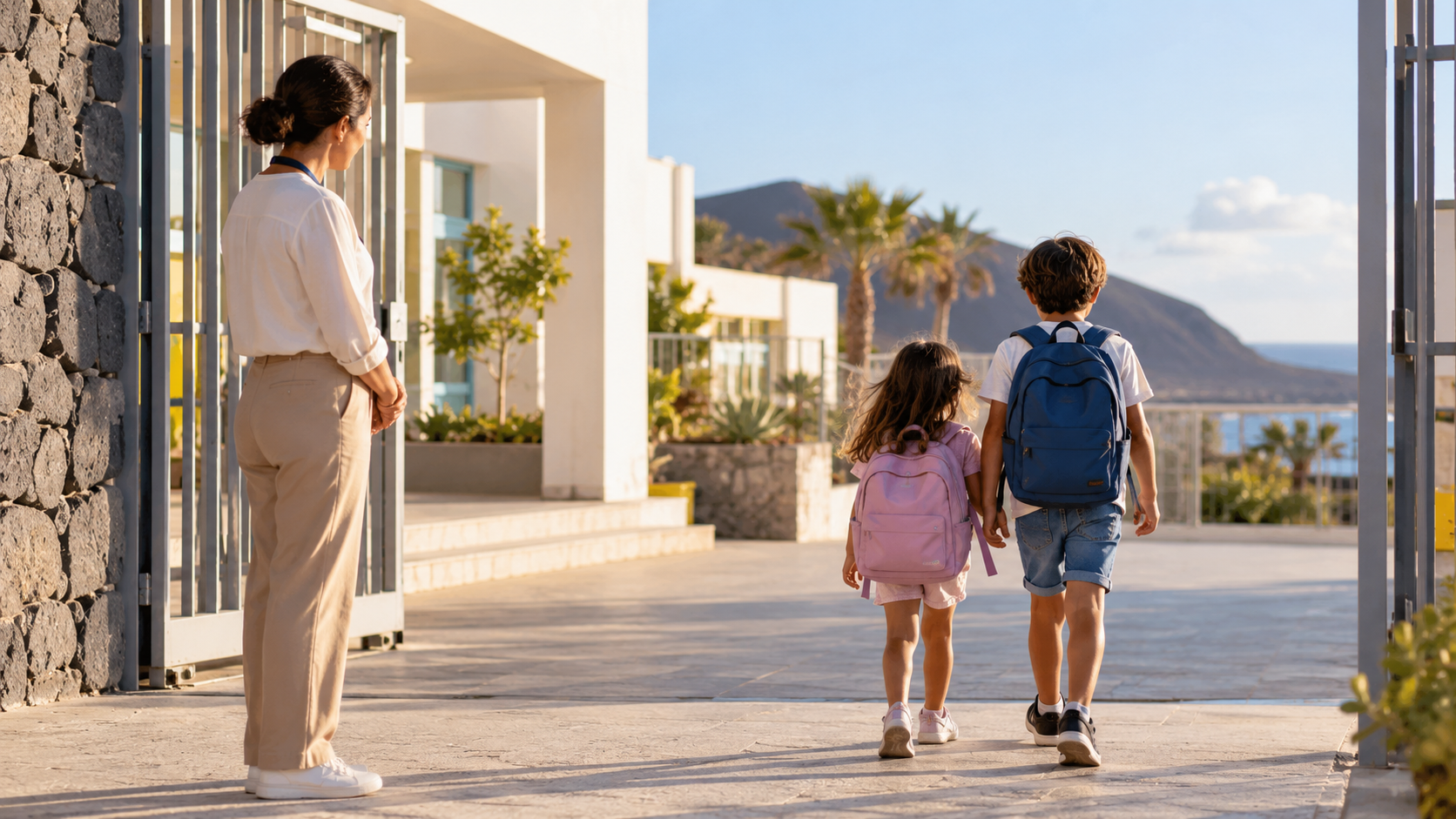
Joint Resolution 110/2026 amends the organisation instructions for Canary Islands public schools. Alongside collection by an authorised adult, a school may exceptionally allow a child to collect and accompany a younger sibling after assessing the particular circumstances.
- Source published
- Effective date or period
- Applicable generally on publication · 2026–2027 school year
- Article on this portal
Current administrative resolution · Correction to instructions for public schools
Our interpretation
Why it matters
The correction affects a routine safeguarding decision at the end of the school day. It is not automatic: the collecting child's age, maturity and independence, the younger child's needs and the journey conditions must be considered case by case.
Editorial recommendation
What to do
Public non-university schools should review collection forms and end-of-day procedures so the general rule and the exception are clearly separated. Keeping the family authorisation and a record of the assessment is prudent practice; this editorial recommendation does not add to the resolution or make the exception an automatic entitlement.
Verified facts
Legal status, publication and current change
The Vice-Ministry of Education and the Vice-Ministry of Vocational Education and Professional Qualifications issued Joint Resolution 110/2026 on 28 September 2026. It is an administrative resolution correcting section 3.7 of Annex I to the 2026–2027 instructions for public non-university schools. It orders publication on the department's website for general application and states no separate commencement date.
Parents and legal representatives may continue to authorise an adult to collect a child, with the authorisation recorded by the school office. The new wording adds that, exceptionally, a child may also be authorised to collect and accompany a younger sibling at the end of the school day.
Full Joint Resolution 110/2026Official 2026–2027 instructions page
Verified facts
What the school must consider
The correction applies only to public schools covered by the instructions. It does not itself extend the arrangement to private or publicly funded private schools and sets no uniform minimum age.
- The particular circumstances: there is no blanket permission for every family.
- The collecting child's age, maturity and degree of independence.
- The age and needs of the sibling being accompanied.
- The nature and conditions of the journey home.
Editorial analysis
What schools should review
Leadership teams can adapt collection forms and end-of-day procedures to capture the exception and the factors governing approval. Recording the decision and its basis is recommended operational evidence of an individual assessment; the resolution prescribes neither a particular form nor a specific deadline.
The amendment does not change the Canary Islands bullying or cyberbullying protocol or the safeguarding coordinator's duties. The portal's protocol activation tool therefore requires no change.
Primary source and reading standard
Government of the Canary Islands · Joint Resolution 110/2026Check the original document and its date before acting. The portal’s proposals are labelled as editorial recommendations and do not replace applicable rules.
Disclosure: Luis Manuel Tolmos has a professional connection with Brains International Schools, described in his profile. This analysis is independent.
Continue the conversation
Share a reflection, question or experience related to this conversation.
Comments are reviewed before publication and shared across the Spanish and English editions. Do not include children’s personal data, confidential information, personal attacks or advertising.
Loading discussion…