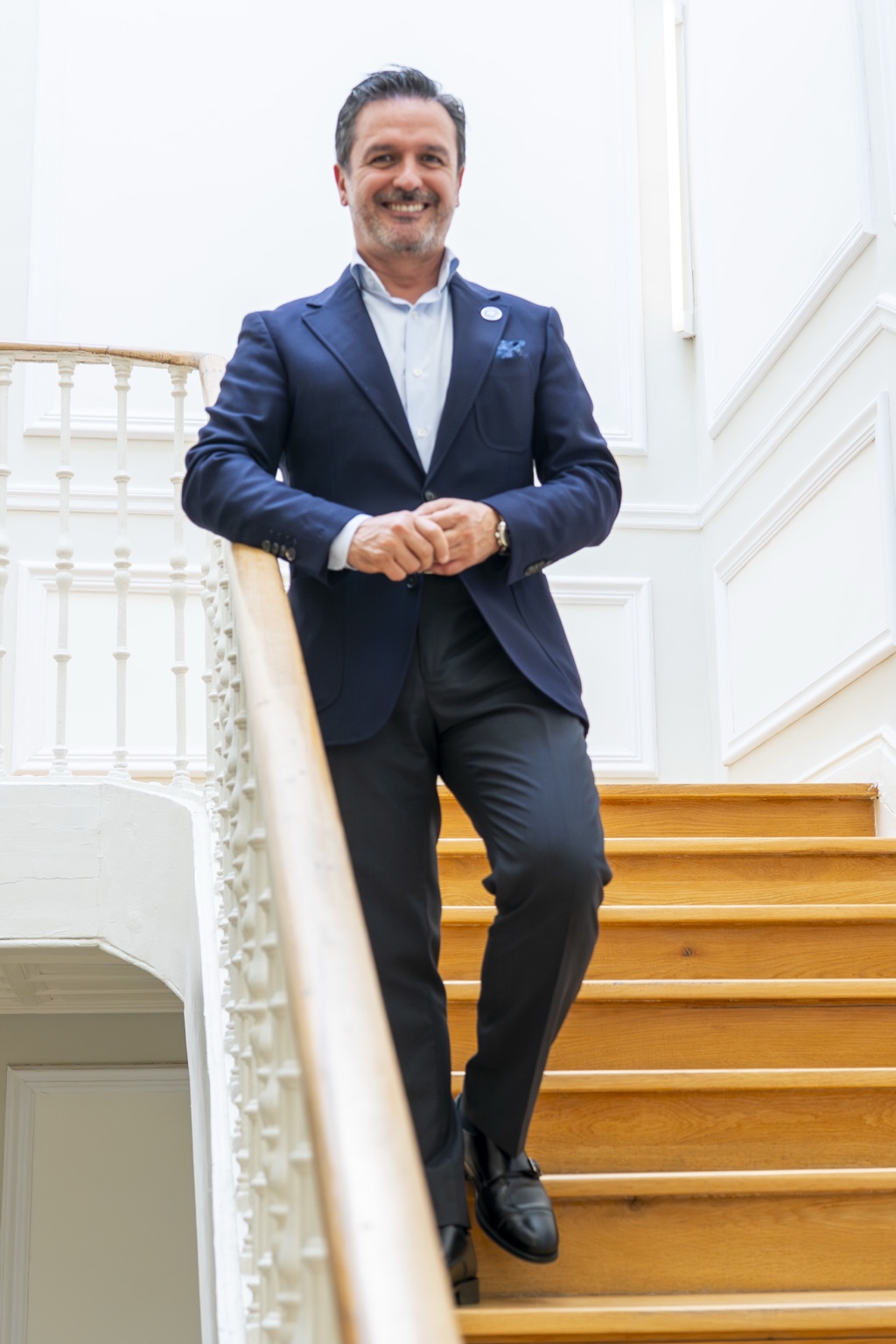
Lawyer, ICAM no. 107770, specialising in technology law. Director General of colegiobrains.com and university lecturer. This project develops his personal research in educational legaltech in the context of his ongoing studies in the AI Strategy for Legal Leaders course at Stanford Law School Executive Education, with independent editorial responsibility.
Madrid · SpainEducation as a system. Leadership as service.
01 · An idea of education
Education is not about preparing students for a world we already know, but giving them the judgement, balance and confidence to build the next one.
Personal vision
02 · Education at scale
From classroom to boardroom. A complete view.
A career connecting executive leadership, educational vision, university, research, talent, innovation and institutional responsibility.
2015 — present
Brains International Schools
Director General since 2021
Strategic, operational and financial leadership of a group of five educational centres. Five-year strategy, sustainable growth, academic and corporate leadership, digital transformation and relationships with families, the board and institutions.
Business development and partnerships with companies and institutions in technology, design and innovation. Legal leadership and lecturer in computer law, intellectual property and videogames.
Leadership of multidisciplinary teams across fashion, architecture, videogames and graphic design; coordination of scientific advisers, sector studies and reports on the economic value of design.
2016 — present
Fundación CINNED
Trustee, co-founder and secretary general
Projects and partnerships to improve pre-university education: talent, guidance, critical thinking, mental health, ethics and artificial intelligence.
A private education group cannot be managed by separating education and economics. Without a strong educational project there is no trust or enrolment; without economic sustainability there is no long-term project.
Management advice drawn from experience, not a catalogue of achievements.
01
Education purpose
Decide as an educator too
A Director General should understand classrooms, phases, teachers and learning evidence. A management decision is only good when it protects or improves the educational promise.What changes for the student and the teacher?
02
Economics & enrolment
Understand what sustains the project
In a private school, enrolment is the essential recurring income. Capacity by phase, retention, admissions, pricing, financial aid, staffing, investment and cash must be read as one system.Where are we gaining or losing trust and continuity?
03
Talent & culture
Care for the people who make school possible
Selecting, developing and retaining excellent teachers is strategy, not personnel administration. Climate, clarity and professional dialogue ultimately reach the classroom.Do teams know what is expected and how they will be supported?
04
Academic innovation
Prioritise programmes with purpose
Innovation should answer an educational need and genuine demand. Test, measure and scale programmes — and close those that produce activity or image without impact.What outcome do we seek, and how will we know it works?
05
Technology & data
Use technology to serve better
Technology should simplify processes, expand knowledge, improve collaboration and enable better decisions. It does not replace human relationships or make a school innovative by itself.What friction does it remove, and what capability does it create?
06
Services & wellbeing
Educate beyond the classroom
Nutrition, dining, transport, sport, guidance, safeguarding and activities are part of the educational experience. Their quality directly affects wellbeing, reputation and family retention.Do we apply the same standard of care to every service?
07
Business development
Grow without diluting identity
New programmes, partnerships, phases, services or campuses should start from the mission, tested demand and real operating capacity. Growth also means knowing what to decline.Is there educational fit, demand and capacity to deliver?
08
Relationships & governance
Build legitimacy and anticipate risk
Public bodies, universities, employers and associations extend a school's impact. Safeguarding, compliance, data, facilities and reputation also require constant governance and review.Who needs to be informed, involved or protected?
Executive agenda
Six questions for every monthly executive meeting
Every indicator needs an owner, target, frequency and decision threshold. Reporting is not enough: the meeting should end with priorities, owners and dates.
01How are enrolment, capacity and retention moving by campus and phase, and why?
02Where are the variances in income, staffing, cash and investment, and what decision do they require?
03What evidence shows that learning and priority programmes are improving?
04Where are the talent risks: critical vacancies, turnover, absence, climate or middle leadership?
05Which failures in admissions, communication, dining, nutrition, transport or wellbeing are eroding trust?
06Which partnership, risk or strategic decision needs the Director General today and cannot be delegated or delayed?
The director's bookshelf
Read to lead with better judgement.
A selection on instructional leadership, change, strategy, execution and systems thinking. Links go to publishers or institutions and are not affiliated.